
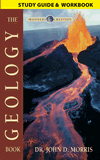
The Geology Book, Lesson 3
The Earth’s Surface
These lessons are geared for middle-school students. Each lesson contains a series of questions to answer that pertain to the reading assignment.
Introduction
These lessons are geared for middle-school students. Each lesson contains a series of questions to answer that pertain to the reading assignment. There is a section of each lesson for advanced students. Teachers should start with the Scripture lesson.
It is important that teachers prepare themselves by reading the stated pages prior to having the student read the assignment. If a child is not able to read yet, parents may wish to read the text to the student.
Text
- Pages 20–27
Scripture
- Genesis 8:4
- Psalm 121
Questions
- Give a brief description of the seven kinds of plains discussed in this chapter.
- Three types of plateaus are mentioned. Write a short description of each type and give an example of each type.
- Write a short description of how mountains are formed, and give an example of each type.
- Name two erosional features, and write a brief description of each type.
Terms
- Sediment
- Alluvial sediment
- Continental shield
- Canyon
Activity
This “experiment” will take a few weeks. Erect a mound of dirt in your backyard (pile of dirt should be at least three feet high). Visit the mound each day and record the following information: height of mound, width of mound. You will notice that the mound will get shorter and the base wider. Child should determine what could have caused the difference in height and width. Was it the wind? Was it rain? Was it a dry-spell? etc. Have fun with this.
Additional resources (for the more advanced student)
- Eroding ages
- Australia’s Burning Mountain
- Mt. St. Helens
- Sand stratification (Technical)
- Rapid erosion at Mount St Helens
Support the creation/gospel message by donating or getting involved!

Answers in Genesis is an apologetics ministry, dedicated to helping Christians defend their faith and proclaim the good news of Jesus Christ.
- Customer Service 800.778.3390
- Available Monday–Friday | 9 AM–5 PM ET
- © 2026 Answers in Genesis