by James Upton, Independent Researcher, England, UK
The question of how distant starlight can be seen in a young Universe has received much attention within creationist research. But creationist cosmological models need to explain much else in addition to the passage of light across vast distances. On both large and small cosmic scales there is a diverse range of trends, patterns, and phenomena that beckon some kind of explanation. Many of these can be understood plausibly within the framework of the standard “big bang” cosmology. But few attempts have been made to integrate them into a model for a young Universe. After surveying the astronomical evidence I discuss various avenues that creationist cosmology could profitably pursue in facing this challenge.

by Mitchel Soltys, Cary, NC
Modern biology has come to realize that all life is built upon information stored within DNA. Until now, discussions of genetic information have relied almost exclusively on models of information that do not use variables. The result is that a scientific understanding of life is hindered, because investigations are based on inaccurate models of biological information.
By contrast, the Bible’s description of created kinds implies an information model which uses variables. The findings in this paper show that a model which uses variables forms a stronger basis for true scientific understanding of biology and, by implication, the Bible provides a superior foundation for scientific investigation. In addition, the paper is able to propose a definition of biblical kinds based upon an information model which uses variables.
by Anne Habermehl
The biblical story of the Tower of Babel is believed by many to be the record of a real historical event that took place after the worldwide Flood, at a time when the earth’s population still lived together in one place. The enduring archaeological question, therefore, is where the Tower of Babel was built. It is widely considered that Shinar, where the Bible says the Babel event took place, was a territory in south Mesopotamia; and that Babel was located at Babylon. However, an analysis of history, geography, and geology, shows that Shinar cannot have been in the south, but rather was a territory in what is northeastern Syria today; and that the remnants of the Tower must be located in the Upper Khabur River triangle, not far from Tell Brak, which is the missing city of Akkad.

by Larry Vardiman, Institute for Creation Research, and Wesley Brewer, Fluid Physics International
A hypercyclone was simulated over the Arabian Sea for sea-surface temperatures (SST) of 40°C (104°F), about 10C° (18F°) warmer than normal, to determine if precipitation could be enhanced over the Middle East and explain biblical and paleo-climatological evidence for greater vegetation in the past. A spur in the mid-ocean ridge extends from the Indian Ocean, through the Arabian Sea, to the Red Sea. Warmer sea-surface temperatures were likely the result of the generation of the modern ocean floor via seafloor spreading processes during the Flood. Cyclone Gonu on June 2–20, 2007 was simulated using the National Center for Atmospheric Research (NCAR) mesoscale weather model WRF (Weather Research and Forecasting Model) using a computational domain centered on Saudi Arabia and extending from the center of the Arabian Sea to the center of the Mediterranean Sea and from central Africa to the Himalayas. We present precipitation, wind speed, and humidity for the cyclone. The cyclone changed from a high-category storm to a hypercyclone exhibiting greatly increased areas and magnitudes of precipitation, wind speed, and relative humidity over the entire Middle East.

by Jerry Bergman
It is often claimed that the human retina is poorly designed because it appears to be placed in the eye backwards. This design requires that light travel through the nerves and blood vessels in order to reach the photoreceptor cells which are located behind the eye’s wiring. This design also requires the nerves to pass through the retina in an area that lacks photoreceptors, producing a blind spot, the focus of this paper. One reason the blind spot is not a problem is that the brain uses information from the retina only to construct an image and does an excellent job of dealing with the many “blind spots” such as shadows, reflection problems, dim light, and dirt on a person’s glasses. Furthermore, the blind spot is located in a region used only for peripheral vision to scan beyond a person’s main focus for areas of potential interest.
by Jeffrey P. Tomkins
Claims about high genomic DNA sequence similarity between humans and chimpanzees are typically made to audiences that do not understand the various layers of technology and ideological bias imposed upon the origination of the data in question. The recent human-chimp Y-chromosome project introduced a number of important genomic tools to achieve a considerably less-biased analysis. The results indicated a much higher level of dissimilarity in both gene content and overall sequence similarity than the previously reported levels up to 99% similarity. As of yet, no similar study utilizing a less-biased genomic framework for autosomal regions has been reported. When evaluating comparisons between genomes using DNA sequence, it is important to understand the nature of how that sequence was obtained and bioinformatically manipulated before drawing any conclusions. It is not uncommon to arrange the sequence of a genome for which little is known by using the genome of a hypothetical closely related organism that has better developed genomic resources. It is also not uncommon to first screen the framework model genome to find regions of high similarity prior to any comparative analyses and to even omit gaps in the final DNA alignments before determining sequence identity. As a result, evolutionary bias literally colors every aspect of the DNA analysis and annotation. Understanding the technology used to produce a comparative genomic product for inter-genome studies is required prior to making any definitive conclusions about the data presented. At present, a considerably more unbiased approach to comparative genomics needs to be applied to the analysis and annotation of genome.
by Tim Chaffey
Few individuals in church history are as popular as Augustine of Hippo. His impressive body of work on diverse subjects, combined with his tremendous influence on Roman Catholics and Protestants, have led believers to imbue Augustine’s writings with great authority. Consequently, he is frequently cited by those seeking support for their particular position on theological matters. This practice is especially observed in the creation versus evolution and age of the earth debates. Young-earth creationists, theistic evolutionists, old-earth creationists, and intelligent design proponents have each claimed Augustine as one of their own and each of these scholars has provided quotations of Augustine which seem to support their view.
The famous church father wrote four separate commentaries on the first chapter of Genesis. This paper surveys these works and demonstrates that Augustine was not concerned with the modern controversy. Nevertheless, his purpose for writing each commentary and the varying hermeneutic throughout these works has led to the confusion that exists concerning his beliefs. Modern participants in the age of the earth debate can gain remarkable insight from these commentaries. Biblical creationists have repeatedly warned about the dangers of allegorizing narrative passages and reinterpreting the text based on the science of the day. Since these two practices are exemplified in Augustine’s writings on Genesis, readers will see why the literal historical-grammatical hermeneutic protects one from making egregious interpretive errors.
by Callie Joubert
According to the Genesis record of Creation, God created various kinds of things to reproduce their own kind. It has become customary to refer to the created kinds as natural kinds. To assume that “natural kind” is a mere biological concept rather than a metaphysical concept would be a mistake. This mistake has the unfortunate result that Christians find it difficult if not impossible to evaluate and correct rival views to created kinds. The aim in this paper is to help correct this state of affairs. Section I presents the biblical picture of created natural kinds, and Section II employs philosophy to clarify important metaphysical distinctions in support and defense of the biblical assumptions and beliefs stipulated in Section I. Special emphasis will be laid on persons. It is hoped that the end result will serve as an apologetic for the truth of Scripture in today’s scientific and evolutionized world.
by Callie Joubert
Emergentism comprises two theses: (1) there is no such thing as a pure spiritual mental being because there is nothing that can have a mental property without having a physical property, and (2) whatever mental properties an entity may have, they emerged from, depend on and are determined by matter. For Christian physicalists, the view of the human person in Scripture is accordingly monistic. Underlying this view is an appeal to neuroscience and the evolutionary history of human beings. The aim in this paper is to respond to their claims by taking Genesis 1:2 as the point of departure. The argument is that the Spirit’s presence and creative activities at the beginning of creation serve as a paradigm for how we are to understand the relationship of the soul/spirit to the body and of the mind to the brain. Logical, epistemological, and ontological objections will show that radical emergentism as an explanatory theory of consciousness, mental states and personal agency is so implausible that it cannot be true.
by Matt McClellan
One of the most popular topics among young earth creationists and apologists is the relationship of the Bible with Ancient Egyptian chronology. Whether it concerns who the pharaoh of the Exodus was, the background of Joseph, or the identity of Shishak, many Christians (and non-Christians) have wondered how these two topics fit together. This paper deals with the question, “How does ancient Egyptian chronology correlate with the book of Genesis?” In answering this question it begins with an analysis of every Egyptian dynasty starting with the 12th Dynasty (this is where David Down places Moses) and goes back all the way to the so called “Dynasty 0.” After all the data is presented, this paper will look at the different possibilities that can be constructed concerning how long each of these dynasties lasted and how they relate to the biblical dates of the Great Flood, the Tower of Babel, and the Patriarchs.
by Jeffrey P. Tomkins
The author believes that his use of the Y-chromosome comparison example was misinterpreted and desires to clarify.by C. R. Twidale, J. A. Bourne, School of Earth and Environmental Sciences, Geology and Geophysics, University of Adelaide, Adelaide, South Australia
Controversy and informed debate are the lifeblood of scientific investigation. Thus Ken Patrick’s 2010 paper on the origin of Uluru is welcome.by Ken Patrick, Cedarville University, 251 North Main St., Cedarville, Ohio 45314
Twidale and Bourne’s comments are appreciated by this author who respects their professional and long-standing experience in the field of modern geomorphology.by Andrew J. Fabich, Assistant Professor of Microbiology, Liberty University, 1971 University Blvd, Lynchburg, VA 24502
While there are a growing number of religious people in Western civilization, there are fewer people going to church. In particular, this trend has been observed most significantly among emerging adults in their 20s as was found by Ken Ham in his book Already Gone with Britt Beemer (Ham, Beemer, and Hillard 2009). The results of their study suggested a significant change among the worldview of Western civilization. The worldview of Western civilization is often described by commentators using the term postmodernism. However, the term postmodernism is inadequate to describe the worldview of Western civilization today for several reasons. Even though these terms are used regularly by many and introducing a new set of terms for novelty’s sake is not always the best approach, it is important to abandon using the term postmodernism because we have experienced a significant shift in Western civilization reflected in many different areas of life. A better term to describe the worldview of Western civilization today is neomodernism. To demonstrate this, a brief history of different worldviews is presented to substitute the term postmodernism with the term antimodernism. Understanding that antimodernism is a reaction against modernism illustrates that Western civilization is no longer antimodern. Analyzing the current worldview of Western civilization, the term neomodernism is used to show just how this popular worldly philosophy has infiltrated the church. Having a better understanding of today’s worldview helps us reach the next generation for Christ through teaching apologetics to all generations and living biblically both in church and at home.
by Callie Joubert, Truth Exposed, P. O. Box 300, Paulshof, Johannesburg, South Africa 2056
The presence of moral evil (sin) in the world is relatively easy for the Christian creationist to explain, and free choice is key to that explanation. To Christian evolutionist and professor of biology Daniel Brannan, the idea of a very good Creation and an Adam and Eve who were deceived and sinned is not only incoherent but also makes God the cause of sin. Brannan proposed that Christians accept an Irenean sense of original sin, which entails that Adam was essentially an undeveloped child. Adam was deceived by Satan because he was incapable of distinguishing right from wrong, and Adam had no free choice. How could Adam and Eve have chosen between good and evil, when only after eating of the tree did they achieve that ability? How could they even have been responsible for their choosing, when their eyes were open only after their choice and eating? This paper will show that Brannan’s arguments are based on faulty premises regarding Adam’s constitutional nature, the nature of Adam and Eve’s perfection and Adam’s power of free choice. Adam was not deceived, and God is not the cause of sin.
by Jean K. Lightner, Independent Scholar; Tom Hennigan, Associate Professor of Biology, Truett-McConnell College; Georgia Purdom and Bodie Hodge, Answers in Genesis
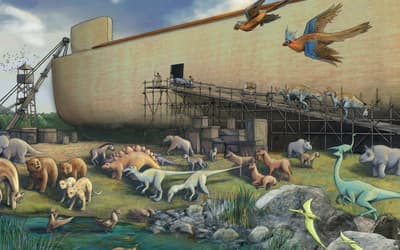
As part of the Ark Encounter Project at Answers in Genesis, a research effort has been initiated to provide information necessary for the best possible reconstruction of the animal kinds preserved on the Ark. This initial paper outlines the basic rationale that will be used and the underlying justification for it. The biblical text provides strong evidence for each kind being a reproductive unit. Based on this and biological evidence that reproduction requires significant compatibility, hybridization will be considered the most valuable evidence for inclusion within an “Ark kind.” The cognitum and statistical baraminology are discussed as they are relevant to this venture. Where hybrid data is lacking, we have chosen to use a cognitum method. Using current taxonomic placement as a guide, pictures and/or personal experience with the animals will be used to find obvious groupings. If the grouping seems excessively high taxonomically, the family level may be used as the default level to avoid underestimating the number of kinds on the Ark. Results from statistical baraminology studies and other information will be used where appropriate. It is hoped the result will be a valuable resource for future studies in baraminology.
by John K. Reed
Uniformitarian geology has opposed biblical history for over two centuries. Most creationist critiques focus on contrary empirical evidence, but this series pursues a logical and axiomatic critique of the “four-definition” formulation of uniformitarianism. Three of these facets—stasis, gradualism, and generic uniformity—fail to support the concept. The remaining “uniformity of process,” also called actualism, seems on the surface to work well, but can be addressed by seeking justification of its use as an axiom of natural history. Actualism rests on uniformity, and uniformity in turn on causal continuity. These concepts can be evaluated relative to the worldviews of Christianity and Naturalism by the truth test of coherence. Naturalism fails that test, but Christianity passes because causal continuity is coherent with—and only with—Christianity’s God. As a theological issue, uniformity and actualism are best understood as physical expressions of divine providence. Since providence is distinct from God’s acts of creation, actualism is irrelevant to that part of the rock record and its relevance to the Flood depends on the nature of divine action during that event.
by Callie Joubert
Studies of the brain in neuroscience led to two claims about human beings: the brain is what makes them human, and the soul is no longer needed to explain life, consciousness, and human nature. In order to deal with these issues, this study commences with a brief introduction to the thought forms that underlie these claims. It then presents a biblical picture of the soul and created kinds. The aim is to show that the soul is not only the bearer of life and the first cause and director of the body’s structural development and functions, but also identical to the person/self. The final section raises a number of obstacles in the way of a physicalist, specifically, a property dualist understanding of a person as a body/brain. It closes with a brief evaluation of what a physicalist view of a person as a body/brain implies for a Christian understanding of life after death. The conclusion is that the Bible has lost none of its relevance for Christians living in today’s world dominated by scientism, naturalism, and physicalism.
by Jeffrey P. Tomkins
To provide a fresh and less-biased global set of analyses, large-scale comparative DNA sequence alignments between the chimpanzee and human genomes were performed with the BLASTN algorithm. One group of experiments was conducted with query and subject low-complexity sequence masking enabled while the second set had masking parameters disabled. Each group of sub-experiments tested fifteen combinations of three different word sizes (7, 11, and 15) and five different e-values (1000, 10, 0.1, 0.001, and 0.00001) for a total of 1.2 million attempted genome-wide alignments. Individual BLASTN query jobs each involved a data set of 40,000 chimpanzee whole genome shotgun sequences (WGSS) obtained from the National Center for Biotechnology (NCBI) and queried against four different human genome assemblies (GRCH37, GRCH36, Alternate SNP Assembly, and the Celera Assembly).
The use of low complexity sequence masking had the effect of decreasing computational time about 5–6 fold, lengthening the alignments slightly, lowering the number of database hits, and lowering the percent nucleotide identity slightly. Depending on the BLASTN parameter combination, average sequence identity for the 30 separate experiments between human and chimp varied between 86 and 89%. The average chimp query sequence length was 740 bases and depending on the BLASTN parameter combination, average alignment length varied between 121 and 191 bases.
The chimp sequences were subsequently implicated by personal correspondence with NCBI staff and supporting data from this study to be pre-screened for some level of homology to the human genome. Nevertheless, excluding data for the large amount of chimp sequence that did not align, a very conservative estimate of human-chimp DNA similarity genome-wide is 86–89%. Results from this study unequivocally indicate that the human and chimpanzee genomes are at least 10–12% less identical than is commonly claimed. These results are more clearly in line with the large anatomical and behavioral differences observed between human and chimp.
Cutting-edge creation research. Free. Answers Research Journal (ARJ) is a professional, peer-reviewed technical journal for the publication of interdisciplinary scientific and other relevant research from the perspective of the recent Creation and the global Flood within a biblical framework.
High-quality papers for Answers Research Journal, sponsored by Answers in Genesis, are now invited for submission. Interested authors should download and read the Instructions to Authors Manual PDF file for all details of requirements, procedures, paper mechanics, referencing style, and the technical review process for submitted papers.
The views expressed in the Answers Research Journal (ARJ) are those of the writer(s) and not necessarily those of the Editors of the ARJ or of Answers in Genesis.

Cutting-edge creation research presented by Answers in Genesis
ISSN: 1937-9056 | © 2012 Answers in Genesis