CorrectionsAnswers Research Journal, Volume 5, 2012
Table of Contents
-
p1–12An Evaluation of the Myth That “Nothing in Biology Makes Sense Except in the Light of Evolution”
by Jerry Bergman
Darwinists commonly claim that evolution is the foundation of all of the sciences, especially the
life sciences and that “nothing in biology makes sense except in the light of evolution.” To evaluate
this claim I reviewed both the textbooks used for life science classes at the college where I teach and
those that I used in my past university course work. I concluded from my survey that Darwinism was

rarely mentioned. I also reviewed my course work and that of another researcher and came to the
same conclusions. From this survey I concluded that the claim “nothing in biology makes sense except
in the light of evolution” is false.
-
p13–24Numerical Simulations of Hypercanes Charley and Fay in the Caribbean and the Gulf of Mexico over a Warm Ocean
by Larry Vardiman, ICR; Wesley Brewer, Fluid Physics International
Two tropical cyclones were simulated with the NCAR WRF model to determine if warm sea-surface
temperatures would cause them to intensify into hypercanes and follow similar storm tracks as the
original cyclones. Hurricane Charley (2004) and Tropical Storm Fay (2008) were successfully replicated
with the actual sea-surface temperature of about 30°C (86°F). The sea-surface temperature of the
Atlantic Ocean was then warmed to 40°C (104°F) and winds, precipitation, and storm tracks compared
to the actual storms. Both storms intensified, but not as much as had been anticipated, and the storm
tracks diverged greatly from storm tracks of the actual cyclones. The reason appears to be the large
cyclonic circulation which developed off the southeastern coast of the United States and steered the
hypercanes away from Florida. Strong vertical wind shears also developed in the circulation which
suppresses the intensification of hurricanes.
-
p25–37Can Theistic Evolutionism Explain the Origin of Morality?
by Callie Joubert
In recent years there has been a growing body of literature in which theistic evolutionists advance arguments in support of their belief that evolution, properly understood, best describes God’s work of creation. As they see it, there are mainly two obstacles in the way of an evolutionary account of morality: reductionism in science and a literal-historical reading of Genesis 1–3. The aim of this paper is to draw attention to some of their theological and philosophical arguments and the problems they create for both themselves and young-earth creationists. My starting points are the biblical picture of natural kinds, the image of God, and Jesus’ understanding of Genesis 1–3. I then evaluate some of the weaknesses in the main arguments theistic evolutionists advance in support of their evolutionary account of morality. The conclusion is that theistic evolutionism is not only inconsistent with Scripture but also philosophically incoherent.

-
p39–58Numerical Simulations of Three Nor’easters with a Warm Atlantic Ocean
by Larry Vardiman, ICR; Wesley Brewer, Fluid Physics International
Analyses and numerical simulations were conducted on three recent nor’easters which formed on the East Coast of the United States to explore the effects of warmer-than-normal sea-surface temperatures on their wind and precipitation fields. The purpose of the study was to determine how warmer sea-surface temperatures in the Atlantic Ocean following the Genesis Flood would have enhanced nor’easters. Wind and precipitation fields for the actual storms were compared with simulated storms using the NCAR WRF model to insure that the model was accurately replicating the storms. The sea-surface was then increased by about 10°C (18°F) and the models rerun for the three storms. The wind fields and precipitation patterns were compared to the simulated actual storms to find how much the storms had been enhanced and the precipitation footprint changed. The WRF model accurately replicated the actual storms and the warmer sea-surface temperatures dramatically increased the wind speeds and precipitation. The enhanced storms moved more quickly off the Eastern seaboard than the actual storms and formed a larger and heavier snow shield over the northeastern United States and southeastern Canada. The additional accumulation of snow from the larger snow shields likely contributed to the Laurentide Ice Sheet following the Genesis Flood.
-
p59–71Understanding the Nature of Scripture, of Jesus, and the “Dis-Ease” of Theistic Evolutionists (BioLogos)
by Callie Joubert
To understand the nature of the Bible, theistic evolutionists at BioLogos have proposed that
Christians compare Scripture with the divine and human nature of Christ. Underlying this proposal is
their assumption that the authors of Scripture and our Lord were not inerrant. The apostle Paul is also
singled out as the ultimate source of the “dis-ease” for Christians who are seeking to reconcile the Bible
and evolution. First, I show what it is that BioLogos finds problematic to their cause, and I discuss three
problems the BioLogos model creates for Christians. I then present a powerful apologetic to counter
the logic of BioLogos: the logic of our Lord’s life in relation to Scripture. The apologetic suggests that
BioLogos should consider that the ultimate source of their “dis-ease” is the nature and character of
the Creator.

-
p73–79What Makes Us Human, and Why It Is Not the Brain: A Creationist Defense of the Soul: Discussion
by Darrell Estabrook
Certainly there is more to humans than a physical and complex brain architecture from which a mind would seem to emerge (confounding the naturalist). However, this reader has two difficulties.

-
p81–87What Makes Us Human, and Why It Is Not the Brain: A Creationist Defense of the Soul: Reply
by Callie Joubert
To depart from Scripture at any point is neither safe nor right. Thus Estabrook’s discussion of my paper (Joubert 2011) in which he expressed his difficulties with my defense of the soul is welcome.

-
p89–97Review of John Lennox’s Book Seven Days That Divide the World: The Beginning According to Genesis and Science
by Simon Turpin, Full-time church worker, St. Albans, Hertfordshire, England
The issue of the age of the earth is contested within evangelicalism with many leading evangelical apologists advocating an old earth. John Lennox has risen to prominence in the last few years as one of the foremost defenders of the Christian faith, influencing many in this generation. In his book Seven Days That Divide the World Lennox seeks to show that Christians need not be divided over the issue of the age of the earth, and that the Bible’s account of creation in Genesis fits well with contemporary science. In doing this he attempts to show that the young earth view of creation is akin to believing in a fixed earth. Lennox reasons that the church has been wrong in the past over its interpretation of Scripture in light of scientific discovery, and that those holding to a young earth are wrong again.

This paper will show that Lennox’s arguments for an old earth cannot be supported either by Scripture or the history of the church.
-
p99–114Theistic Evolution: An Incoherent and Inconsistent Worldview?
by Callie Joubert
In recent years there has been an explosion of literature in which theistic evolutionists describe, explain, and defend three beliefs at the core of their worldview. Firstly, God was/is working in and through the evolutionary process. Secondly, the evolutionary story of origins is not only scientific but also compatible with the biblical record of creation. And thirdly, they believe their worldview is entirely plausible, intellectually satisfying, and logically consistent. The aim of this paper is to defend the following thesis: Christians are caught up in theistic evolutionism without realizing that the worldview of theistic evolutionism is incoherent and inconsistent with the teachings of Scripture. I first provide some preliminary remarks about worldviews and the way to assess them. I then contrast the core characteristics of young-earth creationism and theistic evolutionism as they apply to a description and explanation of the kinds of entities that exist, their natures, their coming to be, the cause of evil in the world, and how it can be known. Along the way, I highlight various critical issues to consider and provide a critique of theistic evolution.

-
p115–123Parallelism in Hebrew Poetry Demonstrates a Major Error in the Hermeneutic of Many Old-Earth Creationists
by Tim Chaffey, AiG–U.S.
Many old-earth creationists cite poetic passages in an effort to convince people that we cannot and should not interpret the creation account literally. Yet the old-earth creationist is quick to interpret poetic passages literally and treat the narrative passages figuratively. This article will provide a survey of the nature of Hebrew poetry and provide examples of the various forms of parallelism exhibited in the six poetic books of the Bible: Job, Psalms, Proverbs, Ecclesiastes, Song of Solomon, and Lamentations. The final section of this study will show that Genesis 1 is not poetry, and a brief examination of a popular Old Testament event will readily display the vast differences between narrative and poetry.
-
p125–139The Unbeliever at War with God: Michael Ruse and the Creation-Evolution Controversy
by Callie Joubert
Dr. Michael Ruse spent more than 40 years of his life fighting creationism. This fact requires an explanation; it also raises the need to clarify a number of misconceptions pertaining to the controversy between creationists and evolutionists. First, the controversy is not a battle between science and religion. Of importance is to understand the dominant worldview that is driving the scientific enterprise today, and why. Second, there is no such person as an atheist. If this truth can be demonstrated from Scripture, then we need to know more about the so-called atheist, especially, what is driving him. The evidence indicates that a fear of God and afterlife play a major role in the psychology of unbelief. Third, the identity of the Creator and the place of Scripture in the Intelligent Design Movement and philosophical theology need to be reconsidered. It disappoints on several serious grounds. And fourth, theistic evolution cannot be reconciled with Scripture, contrary to what Ruse would have Christians believe.
-
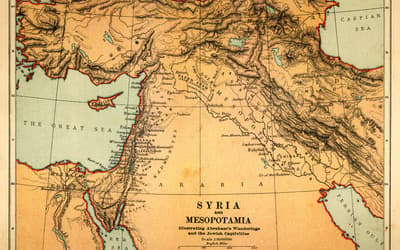
p141–150Abraham and the Chronology of Ancient Mesopotamia
by Matt McClellan
Mesopotamia, the land that is today part of Iraq, Syria, and Turkey, is home to one of the oldest
civilizations to have ever been discovered. It is here that the civilizations of Sumer, Babylon, and
Assyria existed. This land is noteworthy in the Bible because it was here that the exiles were taken
captive after the destruction of Jerusalem. It was also here that Abraham had lived before he set
out to the Promised Land. For many years, Abraham was believed to have lived at the same time as
Hammurabi, king of Babylon. Later scholars would date Abraham to the period shortly before the
reign of Hammurabi. However, the result of recent research is that the chronology of the ancient world

is being redated. Hammurabi now appears to be a near contemporary of Moses instead of Abraham.
In Egyptian chronological studies, the patriarchs are dated earlier than ever before. In spite of this,
there has been little research conducted on the relationship between Abraham and Mesopotamia
in this new chronological revolution. This article will look at the current trends in chronological studies
and how they relate to the life of Abraham. It will come to the conclusion that Abraham lived much
earlier in Mesopotamian history than what most have realized.
-
p151–204Mammalian Ark Kinds
by Dr. Jean K. Lightner, Independent Scholar
Based on the methods outlined in Determining the Ark Kinds (Lightner et al. 2011), information on the class Mammalia was evaluated in an attempt to get a realistic estimate of what mammalian kinds would have been represented on the Ark. Examining information on extant species (those alive today), it was estimated that they represent 137 created kinds. Given the number of extinct mammalian families known from the fossil record, the actual number on the Ark could easily have been well over 300. This estimate is very low compared with those in the past. In evaluating the information, a number of important creationist research questions have been discussed. As further research is undertaken to address these, our knowledge of created kinds will be significantly advanced.

-
p205–216Is Young-Earth Creationism a Bad Choice?
by Callie Joubert
Recently a prominent theistic evolutionist claimed that young-earth creationism has reached a point of intellectual bankruptcy, both in its science and theology; young-earth creationism is an unnecessary choice. The purpose of this paper is to evaluate these claims. Of first importance is to know why and when decisions go awry, from both a psychological and biblical perspective. I then present the reasons why four scientists choose to believe that young-earth creationism is a true representation of the biblical record of creation. The third section argues that any understanding of Scripture that excludes or indicts the divine Himself is necessarily flawed and false.
-
p217–230Creation Date of Adam from the Perspective of Young-Earth Creationism
by David McGee
Within orthodox Christianity, a group of theologians, philosophers, and scientists have affirmed that Adam was created by God around 10,000 BC to 4000 BC. They are known as young-earth creationists. Within the category of young-earth creationists are two subsets: (1) chronogenealogical young-earth creationists who believe that the Bible does not allow for genealogical gaps in Genesis 5 and 11, thus establishing Adam’s creation around 4000 BC and (2) non-chronogenealogical young-earth creationists who believe that the Bible allows for the possibility of genealogical gaps in Genesis 5 and 11 that would not violate hermeneutical rules, thus allowing for a creation date of Adam up to 10,000 BC. This article reveals how young-earth creationists have concluded this approximate age of Adam and to explain the reason for a 6,000 year range between both groups.

-
p231–246Evolutionary Psychology: Why It Fails as a Science and Is Dangerous
by Callie Joubert
Evolutionary psychology is accepted as the fulfillment of Darwin’s vision that psychology will one day be based on a new foundation. Evolutionary psychology is consequently portrayed as an explanatory science and the key to unlocking the mystery of where we came from, how we arrived at our current state, and what defines who we are. This paper demonstrates that evolutionary psychology fails as an explanatory science and why it is dangerous. Of first importance is to understand how evolutionary psychologists think about and approach the study of human psychology. The second part focuses on four problem areas for evolutionists, and shows that evolutionary psychology cannot explain consciousness, the self, free choice, and human nature. It then shows that science has not succeeded in confirming its commitment to physicalism. Finally, it shows why evolutionary psychology is the anti-thesis of a biblical understanding of origins and the nature of human beings. Christians and the public at large cannot afford to accept what they are being told about themselves from the perspective of evolutionary psychology.

ISSN: 1937-9056 Copyright © 2013 Answers in Genesis. All rights reserved. Consent is given to unlimited copying, downloading, quoting from, and distribution of this article for non-commercial, non-sale purposes only, provided the following conditions are met: the author of the article is clearly identified; Answers in Genesis is acknowledged as the copyright owner; Answers Research Journal and its website, www.answersresearchjournal.org, are acknowledged as the publication source; and the integrity of the work is not compromised in any way. For more information write to: Answers in Genesis, PO Box 510, Hebron, KY 41048, Attn: Editor, Answers Research Journal. The views expressed are those of the writer(s) and not necessarily those of the Answers Research Journal Editor or of Answers in Genesis.