
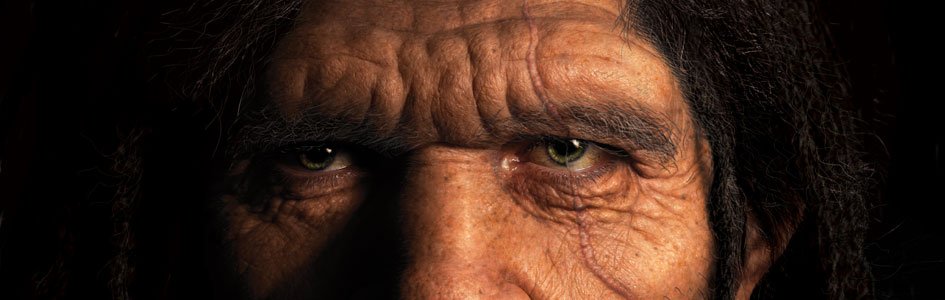
Image from Answers magazine
Caution Necessary when Discussing “Human Evolution”
on
June 1, 1978
Originally published in Creation 1, no 1 (June 1978): 18-19.
The whole question of so-called “human evolution” is really an embarrassment to the informed evolutionist, as evidenced by their usual marked unwillingness to debate this issue. For example, on February 20th this year a debate was held between Dr. Duane Gish of the Institute for Creation Research and Dr. John T. Robinson at the University of Wisconsin. Dr. Robinson has spent most of his research career in the field of paleoanthropology, that is, man’s fossil “ancestry.” He has written several technical articles and books on this subject. Nonetheless, he completely failed to mention human evolution in his entire presentation.
However, creationists should beware of oversimplifying their case because of one or two statements they may find in the literature. For example, in creationist writings you may find one author drawing the conclusion about Leakey’s Skull 1470 that it was “simply an ape.” Another says that he was “essentially modern man.” Both are able to document their case from the evolutionary literature, and the reason for this is simply that evolutionary thinking on most of our “ancestors” is in a state of flux and confusion at present. One simply cannot rely absolutely on any conclusions drawn in any scientific literature. More time is needed for the specimens to be evaluated as they really are (I am referring to those finds made over the last 10 years or so), not how they fit into some presupposed scheme based on a description from a popular magazine. It is of course difficult to find a way of assessing the evidence itself, rather than secondary evaluations. It is particularly annoying to find evaluations being made about a fossil find’s relevance to “human evolution” before a detailed description without interpretation is released.
In a recent television program (Perspective, ABC, 30 May 1978), this was obvious. Rather than a discussion of the specimens, we heard ad nauseam how “excited” the discoverer became or how “thrilled” he was or how “important,” this or that find was. . . . If one compared the conclusions in this program to another recent popular survey in Time magazine, the confusion reigning in this field of enquiry became obvious. It is interesting to see how certain specimens which have been hailed as “ancestral” to man (e.g., australopithecines) are now displaced because of more “modern” remains dated as “older.”
This article is not meant to clear up any of the confusion, merely to point out that it exists (see “Quotes to Note,” this issue) and therefore to sound a note of caution to creationists.
We should not rely too heavily on any evolutionist’s statements, even when they appear to support our thesis, as we may turn out to be leaning on a broken reed.
A good rule-of-thumb is to especially distrust conclusions drawn in the heat of discovery, especially those of the discoverer (N.B. Zinjanthropus). One has to hope that cool, critical appraisals will follow, although this usually takes several years.

Support the creation/gospel message by donating or getting involved!

Answers in Genesis is an apologetics ministry, dedicated to helping Christians defend their faith and proclaim the good news of Jesus Christ.
- Customer Service 800.778.3390
- Available Monday–Friday | 9 AM–5 PM ET
- © 2026 Answers in Genesis