

Are Mammoths Still Alive?
on
September 1, 1993
Originally published in Creation 15, no 4 (September 1993): 23.
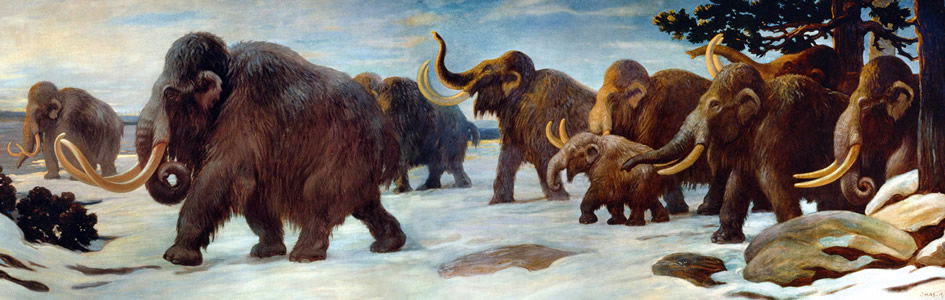
Two Russian scientists have found the remains of a group of woolly mammoths, on an island off northeastern Siberia, which give radiocarbon ages of less than 4,000 years.
Evolutionists have long held that mammoths became extinct more than 10,000 years ago. Now two Russian scientists have found the remains of a group of woolly mammoths, on an island off northeastern Siberia, which give radiocarbon ages of less than 4,000 years.
This shock has caused researchers to consider whether, if they could have been that far out, mammoths may have survived even longer in the unexplored forests of Siberia.
The indigenous Evenk tribe of northeastern Siberia were first contacted at the turn of the century by Russians who reported that they had well-preserved mammoth skins. The Evenks ‘faithfully described the appearance and behavior of the mammoth to astonished ethnographers, and even detailed the beast’s diet and how they hunted it.’ A Russian expedition in 1922 recorded accounts of mammoths being alive—from the same tribe.
Until this recent find, such evidence was ignored by evolutionists, who are now more cautious about declaring when mammoths became extinct. Dr Adrian Lister of London University says, ‘We are not saying that mammoths definitely died out 4000 years ago. We’re saying that in scientific terms, that is the latest we have got evidence for them. It is always subject to revision …’.
It should be noted that a radiocarbon ‘age’ of 4,000 years probably represents a true age considerably younger, according to creationist physicists. This seems to place the remains within the post-Flood era. This frantic reassessment of mammoth history has been called ‘the hottest story in palaeontology since the coelacanth’. (The coelacanth is a fish which was thought to have become extinct 70 million years ago, but was found alive in 1938—which subsequently embarrassed evolutionists.)
References
Nature, Vol. 362 No. 6418, 25 March 1993, pp. 288–289; The Age (Melbourne), 29 March 1993.

Support the creation/gospel message by donating or getting involved!

Answers in Genesis is an apologetics ministry, dedicated to helping Christians defend their faith and proclaim the good news of Jesus Christ.
- Customer Service 800.778.3390
- Available Monday–Friday | 9 AM–5 PM ET
- © 2026 Answers in Genesis