

Fossils—Do They Get More Complex?
Another Evolutionary Idea Rattled by Research
on
March 1, 1998
Originally published in Creation 20, no 2 (March 1998): 32.
One thing that most people think they ‘know’ about evolution is that organisms become more complex as they evolve. After all, isn’t that how a single-celled organism became a person?
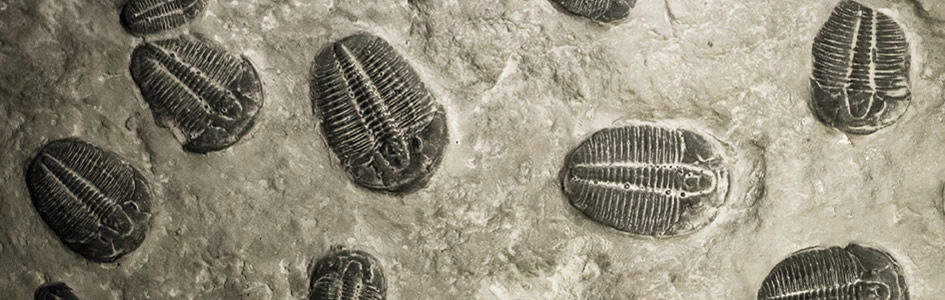
There are ways for evolutionists to try to test this assumption by looking at the fossils. Within their system, as you go up through the fossil-bearing rock layers, they believe you are looking at millions of years of time unfolding slowly. So do the fossils show increasing complexity? We are not talking here about looking at a reptile in one layer, and then a bird in a higher layer and comparing the complexity. In such a situation it would be enormously difficult to determine which was objectively more complex anyway.
‘Everybody knows that organisms ... get more complex as they evolve.’
‘The only trouble with what everyone knows, says McShea, an evolutionary biologist at the University of Michigan, is that there is no evidence it's true.’1
Several researchers have tried looking at the fossils of spiral-shelled creatures called ammonoids, to see if apparently related types get more complex as one goes higher in the layers. Another evolutionist, Dan McShea of the University of Michigan, approached the same question using detailed measurements on the backbones of many creatures which evolutionists believe represent ancestor-descendant pairs. His aim was to see if the ‘descendant’ was more complex than the ‘ancestor’ on the average for each case.
What would the creationist expect the result to be, and why? Obviously, the two fossil creatures believed to be an ancestor-descendant pair would most likely be of the same created kind, laid down at different times during the Flood. There would be no reason for any trend in complexity, if enough pairs are looked at.
And this is precisely what was reported in these studies by evolutionists—no trend at all.
This should not be a surprise to those who realize that the Word of the Creator God, who knows all, is not going to mislead us concerning the real history of the universe.
Footnotes
- L. Oliwenstein, ‘Onward and Upward?’, Discover magazine, June 1993, p. 22—this item was based on information in that article.
Support the creation/gospel message by donating or getting involved!

Answers in Genesis is an apologetics ministry, dedicated to helping Christians defend their faith and proclaim the good news of Jesus Christ.
- Customer Service 800.778.3390
- Available Monday–Friday | 9 AM–5 PM ET
- © 2026 Answers in Genesis