

Are Mutations Helpful?
on
June 1, 1990
Originally published in Creation 12, no 3 (June 1990): 51.
Because natural selection can only choose from what is there, evolutionists must have faith that somehow mutations provide the new raw material for living things to evolve into other, more complicated life-forms having new structures and functions.
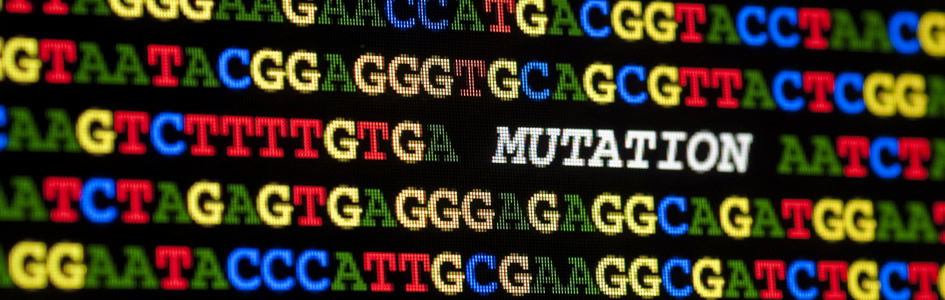
But this is a blind faith, completely unsupported by the facts. The blueprint of living things earned by DNA is more complicated than the most sophisticated computer program. This blueprint is copied when living things reproduce, and mutations are nothing more or less than chance mistakes during copying.
Can you imagine trying to improve a computer program, to give it new, more complex functions, by relying on copying mistakes?
That’s why the thousands of mutations of which we know in the human race are labelled by the diseases they cause. Listen to what the evolutionist Dr Pierre-Paul Grasse, Europe’s most distinguished biologist, has to say. He was past president of the French Academy of Sciences, and editor of the prestigious 26-volume Traite de Zoologie’.
‘The opportune appearance of mutations permitting animals and plants to meet their needs seems hard to believe. Yet the Darwinian theory is even more demanding: A single plant, a single animal would require thousands and thousands of lucky, appropriate events. Thus, miracles would become the rule: events with an infinitesimal probability could not fail to occur.’—Pierre-Paul Grass’
(University of Paris, past-president French Academie des sciences) in Evolution of Living Organisms, Academic Press. New York, 1977, p. 103.
Support the creation/gospel message by donating or getting involved!

Answers in Genesis is an apologetics ministry, dedicated to helping Christians defend their faith and proclaim the good news of Jesus Christ.
- Customer Service 800.778.3390
- Available Monday–Friday | 9 AM–5 PM ET
- © 2026 Answers in Genesis