

Bruce Willis and The Gallup Poll—an Alarming Trend
on
April 6, 2000
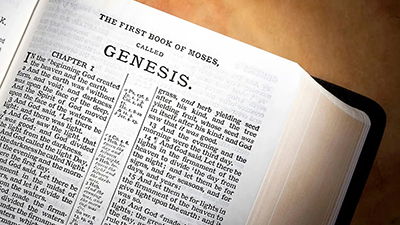
Liberal theologians have labored long to lure Christians away from reading their Bibles as strictly literal history. They sometimes complain that few pay heed. But Gallup Poll data suggest the professors have indeed had an impact.
In 1963, two out of three Americans told Gallup they believed “the Bible is the actual word of God and is to be taken literally, word for word.” By 1998, only one in three took that stance, while nearly half preferred: “the Bible is the inspired word of God, not everything in it should be taken literally.”
There are passages in the Bible that one doesn’t take “literally”.
The problem with such polls is that we at Answers in Genesis would agree with the statement that “not everything in it [the Bible] should be taken literally.” It really depends on what one means by “literally.” We would mean “naturally”—according to the type of literature, context, etc. There are passages in the Bible that one doesn’t take “literally”—but then it’s obvious when that is to be so from the context and type of literature. Be that as it may, there definitely seems to be a trend away from taking the Bible as it was meant to be read. But this is not surprising.
Generations of people have grown up in the church and attended Christian and secular colleges where the Bible’s account of origins in Genesis has been relegated to myth, allegory, metaphor or some literary framework—many different positions except that of literal history (Genesis is written in narrative historical style). Sadly, it seems, most in the church have been led to believe that one can’t trust the Bible in areas of science (geology, astronomy, biology, etc.), and therefore the Bible has become just a collection of stories illustrating moral truth and a message of salvation. The Scriptures are now basically looked on as religious writings—but not a history book.
But if the Bible can’t be trusted in geology, astronomy and biology—then how can it be trusted in morality and salvation? When we read the Bible, morality and salvation are not separated out from the biology, geology and astronomy. For instance, Jesus Christ, the last Adam, became a member of the human race—a descendant of a man called Noah who escaped a global Flood—a descendant of a man called Adam who ate fruit from a tree in a Garden—this first man was made from dust and the first woman from his side—and so it goes on.
No wonder people like Bruce Willis, the actor in the Die Hard movie series said in USA Weekend recently:
They [organized religion] used to hang the whole thing on one hook:
If you don’t do these things, if you don’t act morally, you’re going to burn in hell. Unfortunately, with what we know about science, anyone who thinks at all probably doesn’t believe in fire and brimstone anymore. So organized religion has lost that voice to hold up their moral hand. And the media is dragging us headlong toward the downfall of civilization.
In other words, he has been led to believe that “science” has shown the Bible can’t be trusted (it gets it wrong in geology, astronomy and biology for instance), therefore, the church can’t insist on their Christian morality, which is based on the same book.
Bruce Willis is right, in one sense. If the Bible gets it wrong in science, how can we insist it is the infallible Word of God which must be obeyed?
Sadly, the Gallup poll shows a definite trend in changing attitudes toward the Bible. This is why the church needs a new reformation to return to God’s Word as the absolute authority.
At Answers in Genesis, we are continually in the battle against this trend, showing clearly that one really can trust the Bible in areas of science, which is why we can trust what it states concerning morality and salvation.


Support the creation/gospel message by donating or getting involved!

Answers in Genesis is an apologetics ministry, dedicated to helping Christians defend their faith and proclaim the good news of Jesus Christ.
- Customer Service 800.778.3390
- Available Monday–Friday | 9 AM–5 PM ET
- © 2026 Answers in Genesis