


Biologists Mimic Evolution in the Lab?
A specialist in ‘molecular evolution’ says that he has successfully mimicked natural evolution in his laboratory.
A specialist in “molecular evolution” says that he has successfully mimicked natural evolution in his laboratory. Dr Barry G. Hall of the University of Rochester (New York, USA) reported his findings in the March issue of Genetics. 1
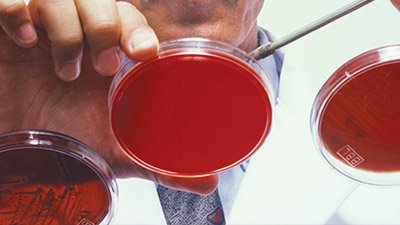
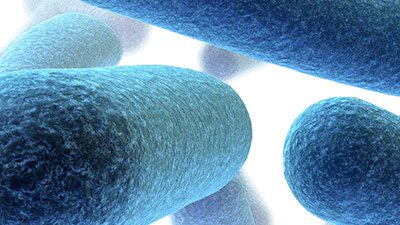
Dr Hall has developed a method of so-called “in vitro evolution” that allows E. coli bacteria to mimic “natural evolutionary processes.” In the recent study, he observed how his experimental bacteria “developed” resistance to a variety of antibiotics. Then he compared the resistance of these bacteria to the resistance found in naturally occurring bacteria.
Hall’s conclusion is just as misleading as his experiment: “… our in vitro evolution technique accurately mimics natural evolution and can therefore be used to predict the results of natural evolutionary processes.”
This is evolution? The gene that produces “penicillin killer” enzymes (TEM-1 ß-lactamase) easily mutates into different forms that break down a variety of antibiotic molecules. Hall was able to get eight bacterial cultures in his laboratory to “develop” resistance to various antibiotics. In seven cases, bacteria in nature already had this resistance, and in one case, the laboratory bacteria actually developed resistance to an antibiotic (cefepime) that bacteria in nature are not known to be resistant to. In two other cases, the laboratory bacteria did not develop resistance, although bacteria in nature have apparently done so.
Creationists have long shown that these changes in bacteria are not the same as the notion of evolution as it is normally believed and understood. For microbes to be transformed into complex, multi-celled organisms, something more is needed.
For microbes to be transformed into complex, multi-celled organisms, something more is needed.
In most cases, changes in bacteria simply involve natural selection-changes in a population when the least fit organisms die off, and the ones that already have resistant factors survive and multiply. (Sometimes these factors are transferred from other organisms that already have them, but in either case, nothing new has arisen.) Creationists are firm believers in natural selection. This is not evolution in the sense that most people use the word-the rise of new, complex organisms, the sort of change which in principle could be capable of changing one-celled creatures into pelicans, pomegranates and people. (See AiG’s articles on natural selection.)
Such evolutionary change would require the addition of new information, which is not a feature of the sort of changes one sees in bacteria. Even when a bacterium develops resistance where there previously was none in the population, by mutation (a random copying mistake which changes the genetic information), the change still represents a loss of information. This sounds counterintuitive, but it’s important to recognize that enzymes are usually tuned very precisely to only one type of molecule. Mutations reduce specificity. Hence the enzyme is less effective in its primary function, but it is able to break down other molecules too. In no case have bacteria been observed to become resistant through a gain of new information, i.e., the emergence of a completely new gene that produces a completely new enzyme.
Hall actually has a noble goal in mind. He hopes to be able to predict how bacteria will develop resistance to new drugs so that drug manufacturers can develop strategies to circumvent the bacterium’s ability to adapt. “We make a drug and after a while bugs adapt to it,” Hall explains. “But if we can predict how they’re going to get around our treatments, we can work out a way to make it impossible for them. We can cut them off at the pass.” 2
The ability to predict how bacteria will respond to new drugs is exciting science, but to say scientists are “predicting evolutionary potential” is sadly misleading. The ability of bacteria to survive in hostile environments points to pre-existing information and mechanisms that God put in the genes of bacteria in the first place. 3 Bacteria only produce bacteria “after their kind,” not new types of creatures.
Footnotes
- Barlow, M. and Hall, B., Predicting evolutionary potential: in vitro evolution accurately reproduces natural evolution of the TEM ß-lactamase, Genetics 160(3):823-832, 2002.
- Chang, A., Newsday, 19 March 2002.
- It was recently discovered that some antibiotic-resistant bacteria have abnormally high mutation rates. This is caused by a mutation in the genes that “proofread” copies of genes, resulting in an increased number of errors that are not corrected. Sometimes these defects happen to result in antibiotic resistance.

Support the creation/gospel message by donating or getting involved!

Answers in Genesis is an apologetics ministry, dedicated to helping Christians defend their faith and proclaim the good news of Jesus Christ.
- Customer Service 800.778.3390
- Available Monday–Friday | 9 AM–5 PM ET
- © 2026 Answers in Genesis