
The Trouble with Sequencing
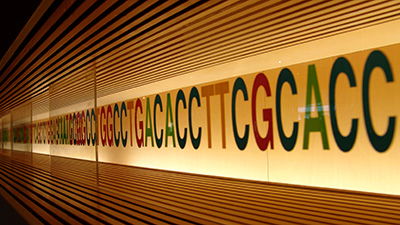
The news has been buzzing lately about two recent papers, one in Nature and one in Science, that are reporting the sequencing of up to one million bases of the Neanderthal genome.
The news has been buzzing lately about two recent papers, one in Nature1 and one in Science,2 that are reporting the sequencing of up to one million bases of the Neanderthal genome.
The recent papers focus on the sequencing of nuclear DNA rather than mtDNA, which will be discussed in another article on this website soon. The nuclear DNA was obtained from a bone sample of a Neanderthal found in Croatia.1 One of the major problems facing the sequencing of ancient DNA is contamination, from microbes as well as from those handling the fossils. Since Neanderthals and modern humans are so closely related, it becomes difficult to discern what DNA is Neanderthal and what is from modern humans. The researchers used Neanderthal mtDNA to help determine which bone had the least amount of contamination from human DNA.1 However, what is being used as Neanderthal mtDNA may actually be modern human mtDNA! Therefore, it makes it difficult to know if Neanderthal nuclear DNA is truly being sequenced.
Both papers seem to agree that the differences between Neanderthal and modern human DNA are very small; probably 99.5–99.8% similar (though this is, of course, based on a very small fraction of the Neanderthal genome). Where there are differences they think many of these may be due to base damage in the ancient DNA and sequencing errors. If this is the case it should be very difficult to accept that Neanderthals are a separate species from humans.
The papers disagree as to whether Neanderthals and humans interbred. The Nature paper suggests that interbreeding may have taken place, while the Science paper says interbreeding did not take place. Same evidence, different interpretation!
The papers also claim that humans and Neanderthals diverged (each becoming separate species) about 500,000 years ago. Again, this is based on many assumptions about the past for which there is no evidence. For example, the Science paper says:
We assumed that Neanderthals and modern humans evolved from a single ancestral population of 10,000 individuals and the Neanderthal population split away from the human ancestral population instantaneously at a time T in the past, with no subsequent gene flow. [emphasis added]
How do they know? Were they there? Obviously, the answers to those questions are “They don’t” and “No.” Fortunately, we do have the eyewitness account of God as given to us in Genesis. God only made two humans, Adam and Eve, and so Neanderthals (which were clearly human, as discussed in many of our articles) are descendants of them.
Footnotes
- Green, Richard, et al., “Analysis of one million base pairs of Neanderthal DNA,” Nature, 444:330–336, 2006.
- Noonan, James, et al., “Sequencing and analysis of Neanderthal genomic DNA,” Science, 314:1113–1118, 2006.
Support the creation/gospel message by donating or getting involved!

Answers in Genesis is an apologetics ministry, dedicated to helping Christians defend their faith and proclaim the good news of Jesus Christ.
- Customer Service 800.778.3390
- Available Monday–Friday | 9 AM–5 PM ET
- © 2026 Answers in Genesis