

Chapter 25
Arthur Jones, Biology
Many of the great scientists of the past were committed Christians and many of those were consciously exploring the implications of their Christian faith for science.
is a science and education consultant. He has a B.S. (Hons) from the University of Birmingham in biology; an M.Ed. from Bristol University and a Ph.D. in biology from the University of Birmingham. Dr. Jones has taught science and religion courses at London and Bristol Universities. He presently works for the Christian Schools’ Trust as their research consultant for curriculum development. He is a member of the Institute of Biology, London.
It is commonly claimed by secular scientists that creationism is a “science stopper.” The contention is that to ascribe anything (e.g., the origin of living organisms) to the direct action of God is to cut off all scientific inquiry. This seems such simple common sense that it has been very persuasive. Nevertheless, it is not difficult to show that the argument is fallacious.
A number of general points can be made. First, the argument is based on ignorance of all the different ways in which Christian faith can enter into science and of how fruitful these have been. After all, many of the great scientists of the past were committed Christians and many of those were consciously exploring the implications of their Christian faith for science. Second, whereas the direct action of God may cut off one type of explanation, others will remain and may even be enhanced. To say that God created the different kinds of animals and plants certainly cuts off explanation in terms of evolutionary continuity. However, it leaves wide-open scientific investigation of every other pattern of relationship (ecological, developmental, etc.) between these kinds. Scientists have been so indoctrinated in the belief that all patterns can only be explained historically in terms of the happenstances of Darwinian evolution that many wouldn’t even know how to look for explanations in other terms. Third, there is abundant documentation of the fact that evolutionary naturalism has often stopped scientific research. To take just one example, the evolutionary assumption that certain organs or features are vestigial has often long delayed the (fruitful) research into their functions.
More specifically, one can appeal to experience and this is where this essay becomes a personal testimony to the scientific fruitfulness of a commitment to creation.
During my undergraduate days when my “heretical” views became known, my professor (Otto Lowenstein, Professor of Zoology) made a point of telling me that no creationist would be allowed to do research in his department! However, he did allow me to do research. From the pressure that was put on me, I can only assume that it was thought that I could be convinced of the error of my ways. If that was the intention, then it badly backfired. Many a visiting scholar was brought into my laboratory to convince me, from their area of expertise, that evolution was indisputably true. Of course, hardly knowing their field, I never had an answer at the time, but after they had gone I would look up the relevant research and carefully analyze it. I always found that the evolutionist case was much weaker than it had seemed and that alternative creationist interpretations were available which were just as or more convincing. My position was further strengthened by the results of my own research.
If there are created kinds then they should be identifiable.
I had decided to tackle the issue of the identity and nature of the created kinds. This was in response to a common evolutionist challenge that always seemed to me to be a reasonable one. If there are created kinds then they should be identifiable. I wanted to investigate the processes of variation within a kind, and gain some handle on the limits to that variation. I needed to be able to keep and breed large numbers of species. My background was in vertebrate studies, so that meant fish. My supervisor was a fan of the cichlid aquarium fish, so that was quickly settled! Those years of research were fascinating. For all the diversity of species, I found the cichlids to be an unmistakably natural group, a created kind. The more I worked with these fish the clearer my recognition of “cichlidness” became and the more distinct they seemed from all the “similar” fishes I studied. Conversations at conferences and literature searches confirmed that this was the common experience of experts in every area of systematic biology. Distinct kinds really are there and the experts know it to be so. Developmental studies then showed that the enormous cichlid diversity (over 1,000 “species”) was actually produced by the endless permutation of a relatively small number of character states: 4 colors, ten or so basic pigment patterns and so on. The same characters (or character patterns) appeared “randomly” all over the cichlid distribution. The patterns of variation were “modular” or “mosaic”; evolutionary lines of descent were nowhere to be found. This kind of adaptive variation can occur quite rapidly (since it involves only what was already there) and some instances of cichlid “radiation” (in geologically “recent” lakes) were indeed dateable (by evolutionists) to within timespans of no more than a few thousand years. On a wider canvas, fossils provided no comfort to evolutionists. All fish, living and fossil, belong to distinct kinds; “links” are decidedly missing. Incidentally, creationists have no reason to be committed to any particular classification scheme, nor to any particular taxa above the kind level. “Orders,” “classes,” and “phyla” must not be allowed to become hallowed by tradition. They may be correctly identified (higher taxa are real), but there again they may not. Some “missing links” have been artifacts of bad classification systems. Morphology (and now biochemistry) have dominated classification, but ecology may yet prove to be a better guide.
My fish were supposedly strictly freshwater, but were found in the tropical fresh waters of three continents—from the Americas through Africa to Asia. I hypothesized that all, or at least most, fish kinds that survived the Flood must be able to survive both seawater and fresh, and much mixing of the two. After the post-Flood diversification within the kinds we should still find that, in marine kinds, there are some species that can tolerate much fresher water and, in freshwater kinds, some species that can tolerate much saltier water. With my cichlids I found that this was indeed the case. I was able to keep some species in pure seawater for more than two years with no harmful effects—they lived and reproduced normally. Literature searches again revealed that this was a common pattern throughout the fish classes.
I was also looking at heredity and already becoming skeptical of the dogma that “DNA is all” (so linked to reductionistic and evolutionary schemes). I discovered there is substantial evidence that there is more to heredity than genes and genic processes.
Indeed, it is clear that the whole cell system is a minimum unit of organism heredity. Genic processes have much to do with variation within kinds, but probably little to do with the distinction of kinds. Genes are best regarded as triggers in complex developmental systems rather than as creators or causes of organic structures. In this regard I found that there had been a vibrant creationist research program in developmental biology before Darwin that has been partly taken up again by the modern “structuralist” biologists (e.g., Stuart Kauffman and Brian Goodwin). Not surprisingly, the latter evolutionists are anti-Darwinian and anti-Dawkins. However, their work can readily be interpreted in creationist terms. It may, of course, ultimately prove wrong (our science is always approximate and liable to error), but it at least makes the point that creationism is not a science stopper. In my view, evolutionary explanations turn out to be fatally inconsistent.
Readings
- A Creationist Critique of Homology, Creation Research Society Quarterly 19(3):166–75, 1982 and 20(2):122, 1983.
- Developmental Studies and Speciation in Cichlid Fish. Ph.D. thesis, Department of Zoology and Comparative Physiology, Birmingham University, United Kingdom, 1972, Diss S2 B72.
- The Genetic Integrity of the “Kinds” (Baramin)—A Working Hypothesis, Creation Research Society Quarterly 19(1):13–18, 1982.
In Six Days
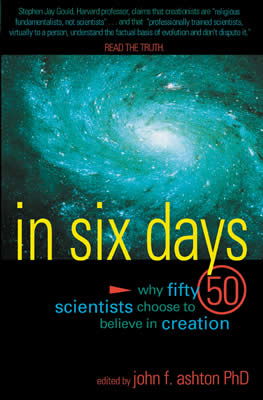
Can any scientist with a Ph.D. believe in the idea of a literal six-day creation? In Six Days answers this provocative question with 50 informative essays by scientists who say “Yes!”
Read Online Buy Book
Master Books has graciously granted AiG permission to publish selected chapters of this book online. To purchase a copy please visit our online store.
Support the creation/gospel message by donating or getting involved!

Answers in Genesis is an apologetics ministry, dedicated to helping Christians defend their faith and proclaim the good news of Jesus Christ.
- Customer Service 800.778.3390
- Available Monday–Friday | 9 AM–5 PM ET
- © 2026 Answers in Genesis