


Bible History
The Bible is the history book of the universe. It provides an accurate account of historical events that serve as a foundation and a framework for understanding, dating, and interpreting secular history and historical science.
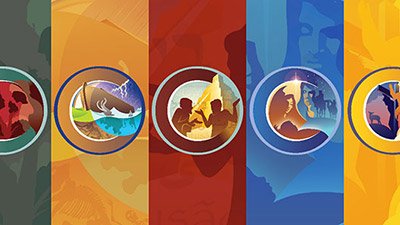
Seven C’s of the Bible
Most people look at the Bible as a book that contains many interesting stories and theological teaching. While this is true, the Bible is so much more—it’s a history book that reveals the major events of history that are foundational to the Bible’s important messages.
Chronology of Ancient Civilizations
Nothing in ancient history (when properly understood) can possibly conflict with biblical history. As archaeologists continue to make exciting new discoveries, we have nothing to worry about. God’s eyewitness record is 100% true and reliable, the only sure starting point for studying the timeline of human history.
The Biblical Timescale
The Bible provides us with a timescale for history. Although not measured by means of atomic clocks, the several dates and facts underlay a proper understanding of the Bible.
Josephus and Biblical History
Josephus is an eminently important and helpful source for gathering details about New Testament times, but Christians should be careful not to read him as an apologist for Christianity or to rely upon him too heavily. Nor should they be ignorant of his bias in favor of Judaism.
Articles About Bible History
-
May 30, 2026 from Answers in Depth
Who were the Hyksos? These enigmatic people are quite possibly important in biblical history, although their origin and interaction with biblical events have been questioned.
-
May 20, 2026 from Answers in Depth
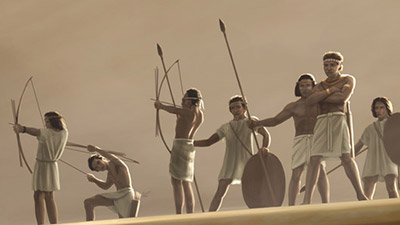
An interesting idea has been developed that connects the Amorite Fourteenth Dynasty of Egypt with the Bible’s Exodus account.
-
April 1, 2025 from Answers Magazine
At the center of Jesus’ trial and crucifixion stand three major political and religious rulers: Herod Antipas, Pontius Pilate, and Caiaphas the high priest.
-
July 9, 2023 from Answers Magazine
God is writing his story on this whirling blue planet, placed in an absolutely huge universe, which is the stage you’d expect for a God-sized plan.
-
July 31, 2022 from Answers Magazine
Four big debates rage in our world today. The foundational answers are in Genesis 1–11.
-
June 1, 2022 from Answers Magazine
Imagine dinosaurs living with people. It’s the only reasonable conclusion if the Bible is true.
-
Oct. 1, 2021 from Answers Magazine
While researching for the Creation Museum’s newest exhibit, the content writer discovered surprising parallels between life at the time of Christ and the culture today.
-
Nov. 8, 2020 from Answers Magazine
One of the most-quoted resources about the world during Bible times is the first-century historian Josephus. But who was this man?
-
May 30, 2020 from Answers in Depth
Biblical scholar John Walton asserts Noah is the “one man” that Paul refers to in his address to the Athenians in Acts 17:26. But is he correct?
-
May 26, 2019 from Answers Magazine
Scripture is so hard to understand. How can anyone be sure they understand it correctly?
-
Nov. 1, 2017 from Answers Magazine
Just three blocks from the heart of DC, a new museum has risen that invites all people to take a closer look at the Bible.
-
July 3, 2016 from Answers Magazine
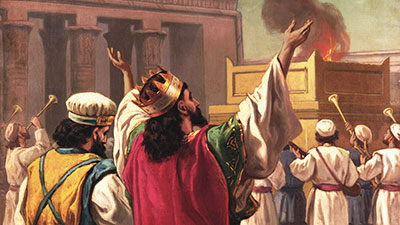
The next time you’re tempted to despair at the hopelessness of our modern church, consider Hezekiah. He faced similar challenges—and overcame them.
-
June 5, 2016 from Answers Magazine
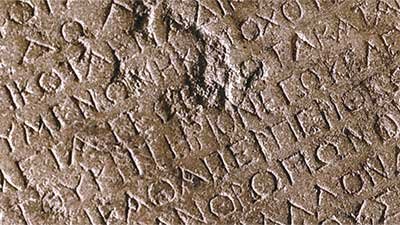
The Nazareth Inscription is a powerful piece of extrabiblical evidence that Christ’s Resurrection was already being proclaimed shortly after He was raised.
-
Are There 20 Commandments?March 2, 2015
The Bible is inerrant, yet some have tried to state that the Bible erroneously records 20 commandments.
-
Jan. 12, 2014 from Answers Magazine
Have you ever wondered how the early history of Egypt and other ancient nations fits within biblical history?
-
Editorials Debate Value of Sanitized BibleMarch 3, 2012 from News to Know
Editorial discusses the supposed usefulness of a "sugarcoated" Bible.















Support the creation/gospel message by donating or getting involved!

Answers in Genesis is an apologetics ministry, dedicated to helping Christians defend their faith and proclaim the good news of Jesus Christ.
- Customer Service 800.778.3390
- Available Monday–Friday | 9 AM–5 PM ET
- © 2026 Answers in Genesis