


Fossils
Throughout the world’s rock layers there are billions of fossils, the remains of organisms that were catastrophically buried largely during the global Flood (2348 BC). Understandably the vast majority of these are marine creatures and they were buried quickly and sequentially by habitat.
Purchase the full Check This Out! video
The Making of a Fossil
Do fossils require millions of years to form? Hardly! Even secular geologists now recognize that rocks form very quickly.
Fossils of Dinosaur National Monument
Each visitor to Dinosaur National Monument sees the same evidence—massive amounts of dinosaur (and other) fossils all jumbled together. How one explains the formation of this fossil bed depends on one’s worldview. When viewed from a biblical perspective, the evidence is consistent with what one would expect from a worldwide Flood.
Putting Fossils Back Together
This research reminds us of the caution we should accord to every fossil reconstruction. Especially when it comes to supposed “ape-men” like Lucy, Ardi, and others, we must be aware of the fact that evolutionary ideas may be (consciously or subconsciously) guiding the reconstruction.
Five Fossil Mysteries
We can never answer all the questions. But with practice at “fossil sleuthing” from a biblical perspective, at least we can get better and better at evaluating each new discovery in a God-honoring way that might yield new insights into God’s person and work.
Fossils Topics
-
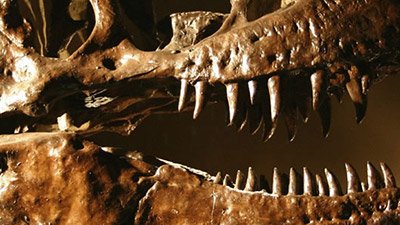
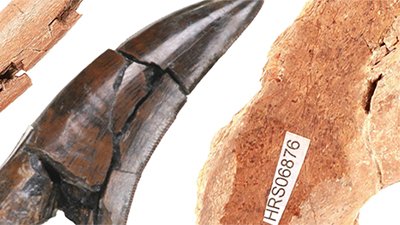
Dinosaur Bones
The presence of soft tissue in dinosaur bones cries out for a young earth, not for millions of years. These not-so-dry bones support the Bible’s history!
-
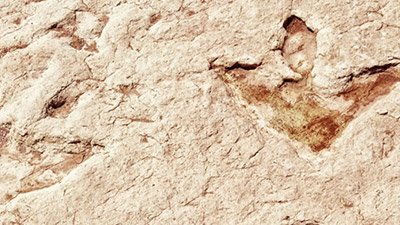
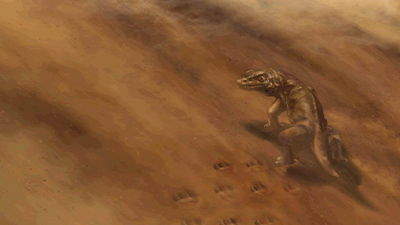
Dinosaur Footprints
Dinosaur bones aren’t the only artifacts left behind by these creatures. Fossilized footprints point toward the watery cataclysm that buried the dinosaurs.
-
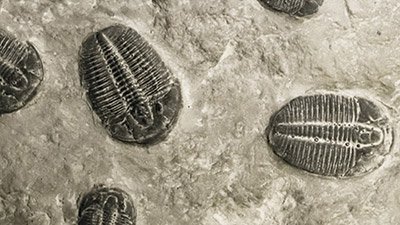
Fossil Record
The fossil record, billions of dead things buried in rock layers laid down by water all over the earth, is dramatic evidence of the historicity of Noah’s Flood.
-
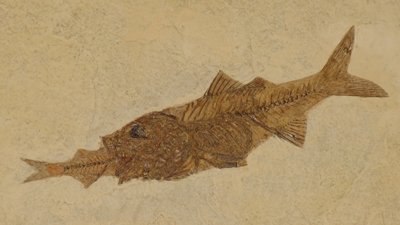
How Are Fossils Formed?
Do fossils really require millions of years to form? The evidence shouts no! A lot of water and a little bit of time rapidly laid down the fossil record.
-
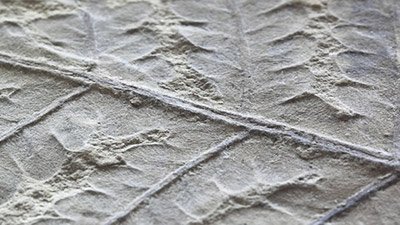
Living Fossils
Living fossils, organisms previously known only through the fossil record and having no close living relatives, pose a grim threat to the evolutionary paradigm.
-
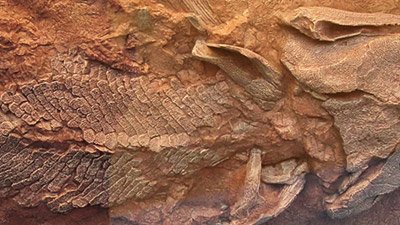
Transitional Fossils
Evolution predicts a fossil record bursting with transitional fossils. Curiously, there are only a handful of highly-disputed fossils that are claimed as such.
-
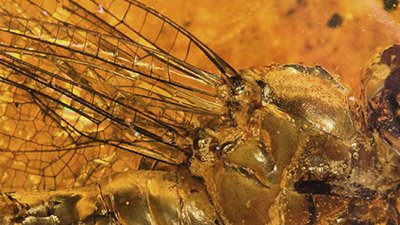
Types of Fossils
The fossil record shows more biodiversity than our current ecosystems. This incredible diversity clearly demonstrates the handiwork of the Creator!
Articles About Fossils
-
Dec. 8, 2025 from Ken Ham Blog
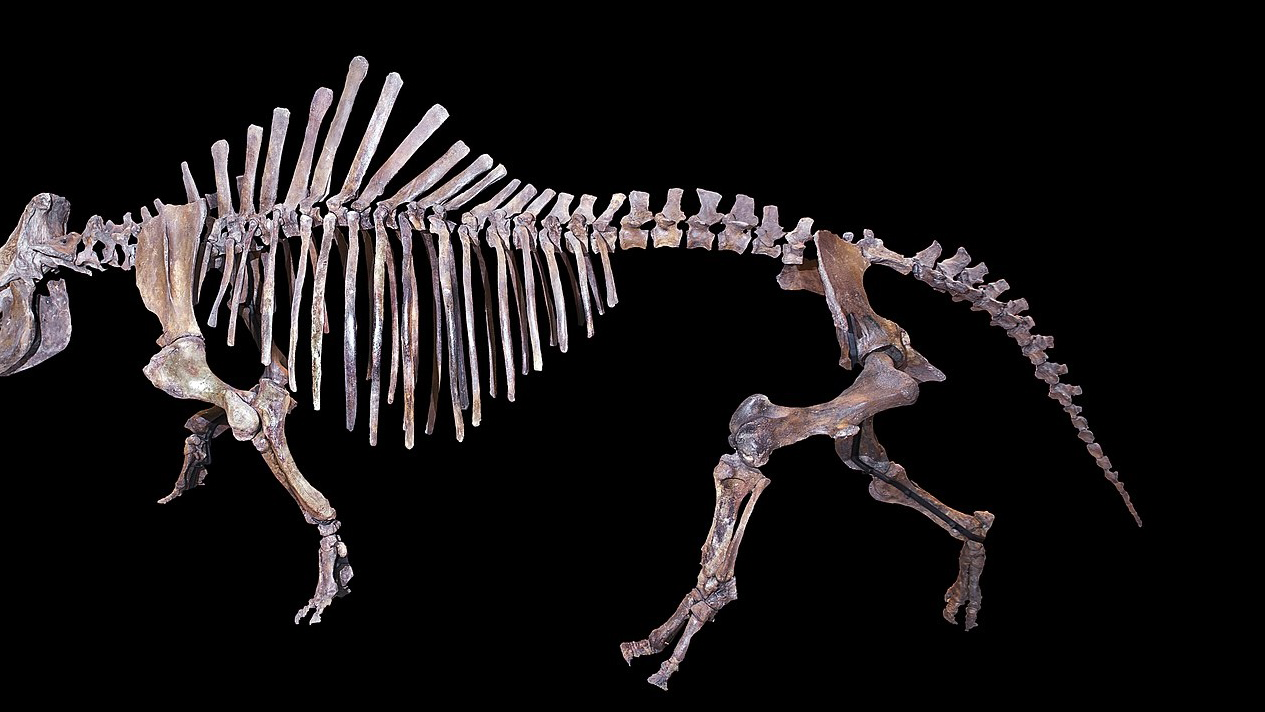
In the frigid Canadian Arctic Circle, researchers have found a nearly complete fossil of a new rhinoceros species, Epiatheracerium itjilik.
-
Nov. 16, 2025 from Answers Magazine
Anyone who doubts there was once a “lost world” during the ice age simply needs to visit the La Brea Tar Pits in downtown LA.
-
Aug. 14, 2025 from Ken Ham Blog
Another ichthyosaur fossil is confirming the truth of rapid burial.
-
July 19, 2025 from Ken Ham Blog
The headline of a popular science summary of the paper reads, “Dinosaur wrist bone discovery reshapes understanding of flight evolution.”
-
June 20, 2025 from Ken Ham Blog
Which came first—the butterfly or the flower? Evolutionary ideas claim the butterfly existed long before flowering plants, but does this make the best sense of the evidence?
-
Jan. 1, 2025 from Answers Magazine
When we start with the history in Genesis, Christians can explain fossils without fear.
-
Oct. 1, 2024 from Answers Magazine
A parasite preserved in amber (fossilized tree resin) has scientists scratching their heads—because it is a shark parasite.
-
July 15, 2024 from Ken Ham Blog
This headline certainly made me look twice, “If dinosaurs hadn’t gone extinct, we may not have delicious grapes.”
-
May 23, 2024 from Ken Ham Blog
Researchers found a fossilized brittle star “frozen in time” during the brief period between splitting and full regrowth of its missing body half.
-
April 1, 2024 from Answers Magazine
Soft tissue poses a problem for evolutionists—but it confirms the biblical timeline.
-
Jan. 1, 2023 from Answers Magazine
Paleontologists have dusted off 45 new dinosaur species every year since 2003, and many of these discoveries unearthed dinosaurs with especially unique features.
-
Sept. 12, 2022 from Ken Ham Blog
An incredible find in Drumheller, Alberta, Canada, shows the creature had to be buried very quickly, even before the skin could decay!
-
Aug. 14, 2022 from Answers Magazine
In a few rare spots, geologists find fossils of strange eight-foot-tall “mushrooms.” What do they tell us about the mysterious world they came from?
-
April 25, 2022 from Ken Ham Blog
A nearly complete ichthyosaur skeleton that was discovered in 2009 was recently in the news again.
-
April 13, 2022 from Ken Ham Blog
A pair of fossils of Nagini mazonense, a small snake-like animal that supposedly lived about 308 million years ago, was discovered in Illinois.
-
July 18, 2021 from Answers Magazine
Ask the average layperson how he or she knows that the earth is millions or billions of years old, and that person will probably mention the dinosaurs.
-
March 7, 2021 from Answers Magazine
The fine details preserved in fossils mystify evolutionists but not paleontologists who believe in the Genesis flood.
-
Nov. 19, 2020 from Ken Ham Blog
Mass of fossilized fish feces (coprolites) did not decay and point to a global flood and the truth of God’s Word.
-
Aug. 31, 2020 from Ken Ham Blog
Evolutionsts struggle to explain how fossilized footprints are older (by millions of years) than the corresponding bones that made them.
-
May 21, 2020 from Ken Ham Blog
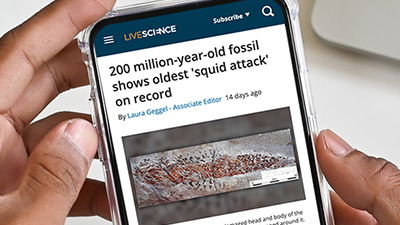
A fossilized belemnoid and fish are interpreted one way by old earth scientists and another way through biblical creation. Which way is correct?
-
March 1, 2020 from Answers Magazine
Putting together the pieces of this puzzle points to the cataclysmic events of the global flood.










Support the creation/gospel message by donating or getting involved!

Answers in Genesis is an apologetics ministry, dedicated to helping Christians defend their faith and proclaim the good news of Jesus Christ.
- Customer Service 800.778.3390
- Available Monday–Friday | 9 AM–5 PM ET
- © 2026 Answers in Genesis