

News to Know
-
Oct. 20, 2023 from Answers in Depth
Carpenter ant colonies evade zombie apocalypse because only the climbing dead become weapons of mass dispersion.
-
Oct. 22, 2021 from Answers in Depth
“There is a book . . .” Ken Ham reminded Nye at their 2014 debate, and the Bible’s history is history we can trust.


More News to Know
-
Oct. 20, 2023 from Answers in Depth
Carpenter ant colonies evade zombie apocalypse because only the climbing dead become weapons of mass dispersion.
-
Oct. 22, 2021 from Answers in Depth
“There is a book . . .” Ken Ham reminded Nye at their 2014 debate, and the Bible’s history is history we can trust.
-
Jan. 18, 2019 from Answers in Depth
The hoatzin is a very unique bird, a conglomeration of traits typical of birds, reptiles, and mammals. Its most unique features are distinctly un-birdlike.
-
Oct. 30, 2017 from Answers in Depth
The colorful history of the domestic cat, filled in by the latest paleogenetic study, illustrates many fun facts that are consistent with biblical truth.
-
Sept. 15, 2017 from Answers in Depth
A group of scientists at Tel Aviv University propose that bacteria in our intestines may be responsible for human altruism.
-
July 27, 2017 from Answers in Depth
We’ve all heard that, compared to mammalian animals like dogs, humans have a poor sense of smell. Did you know that this notion is a 19th century myth?
-
July 20, 2017 from Answers in Depth
When we consider the immediate and wider context of 1 Peter 3:15, there is a lot more to it than we may have seen at first.
-
June 2, 2017 from Answers in Depth
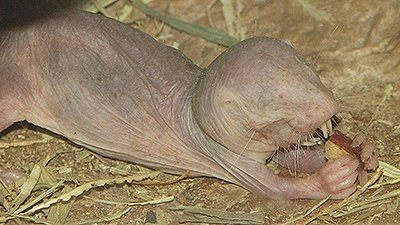
Naked mole-rats survive extreme oxygen deprivation in their crowded burrows by switching on fructose metabolizing machinery in their heart and brain cells.
-
May 19, 2017 from Answers in Depth
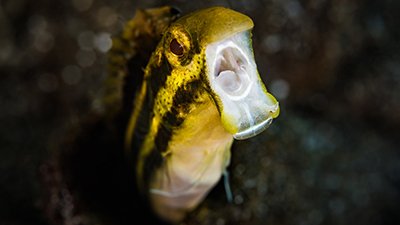
The tiny tropical fangblenny reveals fangs when it opens its mouth, but unusual venom is the real key to its defense—and to the defense of its look-alikes.
-
April 26, 2017 from Answers in Depth
Evolutionists believe that new information about gill embryology suggests gills evolved in the common ancestor of all fish.
-
Jan. 30, 2017 from Answers in Depth
Biophysicists, observing the fascinating properties of liquid droplets, propose that liquid droplet physics could explain how life began.
-
Jan. 19, 2017 from Answers in Depth
One of the most popular facets of science right now is forensics. But no investigative science is more accurate than an eyewitness account.
-
Jan. 17, 2017 from Answers in Depth
Though monkeys can’t imitate human language despite speech-ready vocal tracts because of their brains’ wiring, their versatile alarm calls meet their needs.
-
Jan. 4, 2017 from Answers in Depth
If we share a common ancestor with a chimpanzee, as evolutionists confidently maintain, then how did our brains leap so far ahead in size and capability?
-
Dec. 22, 2016 from Answers in Depth
Scientists from Northwestern University have developed a mathematical model that may help explain animal ornamental mysteries.
-
Dec. 16, 2016 from Answers in Depth
A study in Proceedings of the National Academy of Sciences suggests that the modern practice of Caesarean section is rapidly altering human evolution.
-
Dec. 13, 2016 from Answers in Depth
Dinosaurs and lagerpetids (their supposed evolutionary ancestors) have been found fossilized together, indicating they lived at the same time.
-
Oct. 13, 2016 from Answers in Depth
The authors of a study in Nature claim to have solved human history’s oldest cold case: how and why our iconic, supposed ancestor Lucy died.
-
Oct. 3, 2016 from Answers in Depth
Discovery of placodes on reptile embryos is being seen as proof of the evolutionary connection between reptilian scales, bird feathers, and mammalian hair.
-
Aug. 4, 2016 from Answers in Depth
Like children assembling a jigsaw puzzle, evolutionists have long been trying to piece together the mysteries of turtle shell origins.
-
May 26, 2016 from Answers in Depth
The giraffe’s genome explains its long neck but does not support an evolutionary tall tale.



















Support the creation/gospel message by donating or getting involved!

Answers in Genesis is an apologetics ministry, dedicated to helping Christians defend their faith and proclaim the good news of Jesus Christ.
- Customer Service 800.778.3390
- Available Monday–Friday | 9 AM–5 PM ET
- © 2026 Answers in Genesis