
Does a ‘Transitional Form’ Replace One Gap with Two Gaps?
Originally published in Journal of Creation 14, no 2 (August 2000): 5-6.
Abstract
Creationists are often ridiculed for pointing to gaps in the fossil record. It is alleged, the finding of a ‘transitional form’ means that one can now argue two gaps in the fossile record.
At times, creationists are ridiculed for pointing to gaps in the fossil record, because, it is alleged, the finding of a ‘transitional form’ means that one can now argue that there are two gaps whereas before there had been one. To begin with, this argument is very disingenuous, if only because it tells us nothing about the degree of morphological discontinuity remaining if two smaller gaps do in fact replace one larger one.
Consider if, as an extreme example, the only organisms in existence were yeasts, earthworms, and humans. From the standpoint of ancestor-descendant relationships, evolutionists could state that the last common ancestor of earthworms and humans was more recent than the last common ancestor between Kingdom Animalia and yeasts (Kingdom Fungi). While it is obvious that, in a sense, earthworms do ‘bridge the (one) gap’ between yeasts and humans, the fact nevertheless remains that the two gaps which now exist (between yeasts and earthworms, on the one hand, and between earthworms and humans, on the other) nevertheless are very large. So, while it is technically correct that there are now two smaller gaps instead of one large gap, this has little practical meaning because of the huge discontinuities remaining between the three forms of life.
Nowadays, evolutionists deal with cladograms...rather than ancestor-descendant relationships.
The same holds for cladistic relationships. Nowadays, evolutionists deal with cladograms (branching diagrams which are supposed to show relative degree of relatedness among living things) rather than ancestor-descendant relationships. On a cladogram for the example above, the yeasts would branch off at a node before the one where the earthworms branch off from humans. But this branching pattern would tell us little. In fact, as before, it would only obscure the huge morphological discontinuity which exists between yeasts, earthworms, and humans.
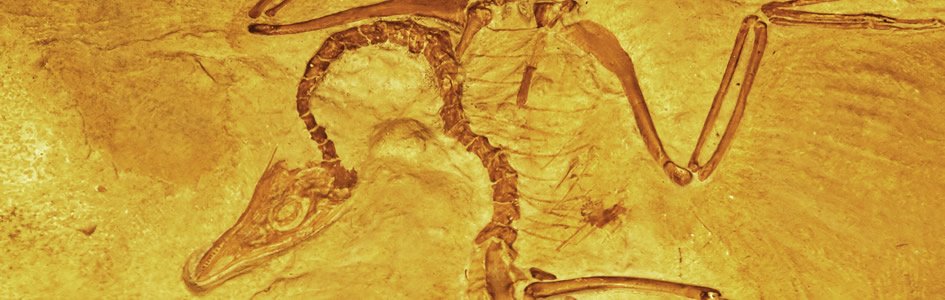
Although I intentionally made the example above extreme in order to make the point, the same considerations apply to more conventional depictions of alleged evolutionary transitional forms. In particular, as long as such things as half-legs/half-wings, or three-quarter scales/one-quarter feathers, are not found as fossils, the discontinuities among such things as reptiles and birds remain large. This remains the case whether or not some ‘transitional’ fossil can be thought of as replacing one larger gap into two smaller but nevertheless still large gaps.
Finally, let us examine the one-gap, two-gap premise in the light of cladogram construction. Can this one-gap, two-gap argument be levelled only against creationists? Certainly not. Consider what happens when allegedly transitional forms are found:
‘It might be expected that the addition of new fossil finds and reanalysis of older ones would improve the fit of age data to a fixed sample of cladograms, by the filling of gaps and by corrections of former taxonomic assignments. … In other words, as a result of 26 years of work, new discoveries and re-assignments had improved the fit in 20% of cases, but caused mismatches of clade and age data in a further 20% of cases. Sometimes a new fossil does not fill a gap, but creates additional gaps on other branches of a cladogram.’1
Clearly, then, to the extent that the ‘two gaps whereas before there was one’ has validity, it is a double-edged sword. It impacts evolutionary thinking no less so than creationist thinking. As a result, if they want to be intellectually honest, evolutionists should realize that they cut themselves with the double-edged sword everytime they level the ‘two gaps whereas before there was one’ argument against creationist scholars.
Of course, it must also be remembered that the very cladistic methodology currently in vogue among evolutionists tends, by its very nature, to de-emphasize the presumed status of (alleged) transitional forms which are so widely touted by the liberal media:
‘Remember that although a living individual must have had ancestors, fossils are unlikely to represent any of them. Even if a fossil was an ancestor, we will never know this—we can never know with certainty what happened in the past. Accepting that fossils are not ancestors also means that there are no “missing links” in the fossil record because fossils cannot be ordered, as traditionally depicted, into an evolutionary lineage. There is no ladder of life. Most, if not all, fossils lie on the dead branches of the tree of life, and we must remember that most of our tree of life is dead, with only a few green living leaves at the tips of the branches.’ 2
But why just discard the false ‘ladder of life’ concept when it is also so easy, based on the empirical evidence, to dispose of the tree of life altogether? Once the lack of major transitions is acknowledged, one must face the fact that there is no tree of life because there are no roots, no trunk, no boughs, and no medium-sized branches. There are only mutually disjointed bushes, and even these consist exclusively of variation only within the kind, and this is almost invariably within the family unit of traditional taxonomy. The scientific creationist needs to only reject organic evolution before being in hearty agreement with the foregoing cited statements.
References
- Benton, M.J., Testing the time axis of phylogenies, Philosophical Transactions of the Royal Society of London B349:8, 1995.
- Irwin, D.M., Dead branches on the tree of life, Nature 403:480, 2000.

Support the creation/gospel message by donating or getting involved!

Answers in Genesis is an apologetics ministry, dedicated to helping Christians defend their faith and proclaim the good news of Jesus Christ.
- Customer Service 800.778.3390
- Available Monday–Friday | 9 AM–5 PM ET
- © 2026 Answers in Genesis