

Vampires of the Animal Kingdom
Here are five creepy, real-life creatures that drink blood. Did God create them as “good”?


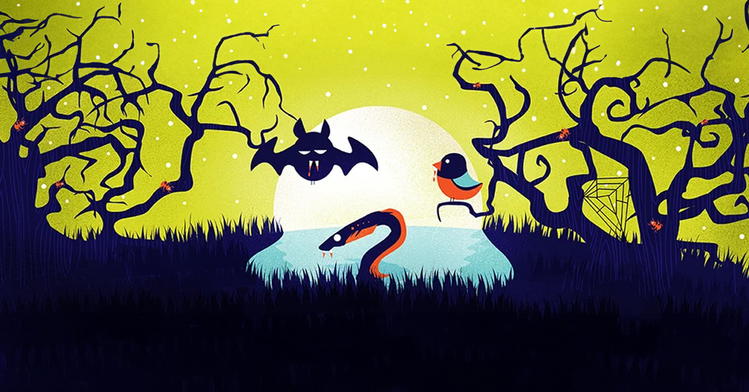
Here are five creepy, real-life creatures that drink blood. Did God create them as “good”?
Many incidents of demon possession are recorded in the New Testament. Why isn’t this happening today? Or is it?
Does claiming you’re a Christian on a survey, or even making public statements about being a Christian, mean that you are a Christian? What exactly is a Christian?
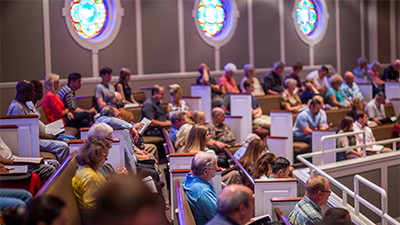
Many claim the earth is ~4.54 billion years old, but the Bible gives us specific details that enable us to calculate the age of the earth to ~6,000 years old. How did we arrive at that date?

God, in his mercy, provided a way for us to be redeemed, to be brought back to a right relationship with God.
It’s heartbreaking to see children suffer, and our minds can wander to the inevitable question, “Why is someone so innocent suffering so badly?” Only God’s Word can give us answers about suffering—and offer comfort. When we allow God’s Word to inform our thoughts, however, we see a different picture. All children—in fact, all people—suffer to one degree or another while living on this earth because humanity is under the curse of sin (Romans 5:12). And no one is innocent, “for all have sinned and fall short of the glory of God” (Romans 3:23).
— Ken Ham (@aigkenham) October 23, 2026
The mighty Tyrannosaurus rex is increasingly being depicted covered in feathers and fuzz. But what did T. rex look like based on the actual fossil evidence?

Sign up for Latest Answers and receive a free audiobook!
Euthanasia was legalized in Canada in June 2016 following a Supreme Court ruling. And what a slippery slope it has been!

Sadly, many Christians, including many Christian leaders (pastors, seminary and Bible college professors, Christian college professors, and so on), have adopted evolutionary geology, biology, astronomy, and anthropology, along with belief in millions of years, and they have mixed such beliefs with God’s Word.
The Bible uses strong language to describe any form of compromise with worldly thinking. And it doesn’t just apply to the ancient Israelites. Hosea 4:12 says, “My people ask their wooden idol, and their diviner’s wand declares to them; for a spirit of harlotry has led them astray, and they have played the harlot, departing from their God.” Hosea used strong language against his fellow Israelites, calling them harlots because they had violated their vows to remain faithful to the one true God by adopting the false gods of the pagan nations into their own system of worship.
— Ken Ham (@aigkenham) October 22, 2026
